
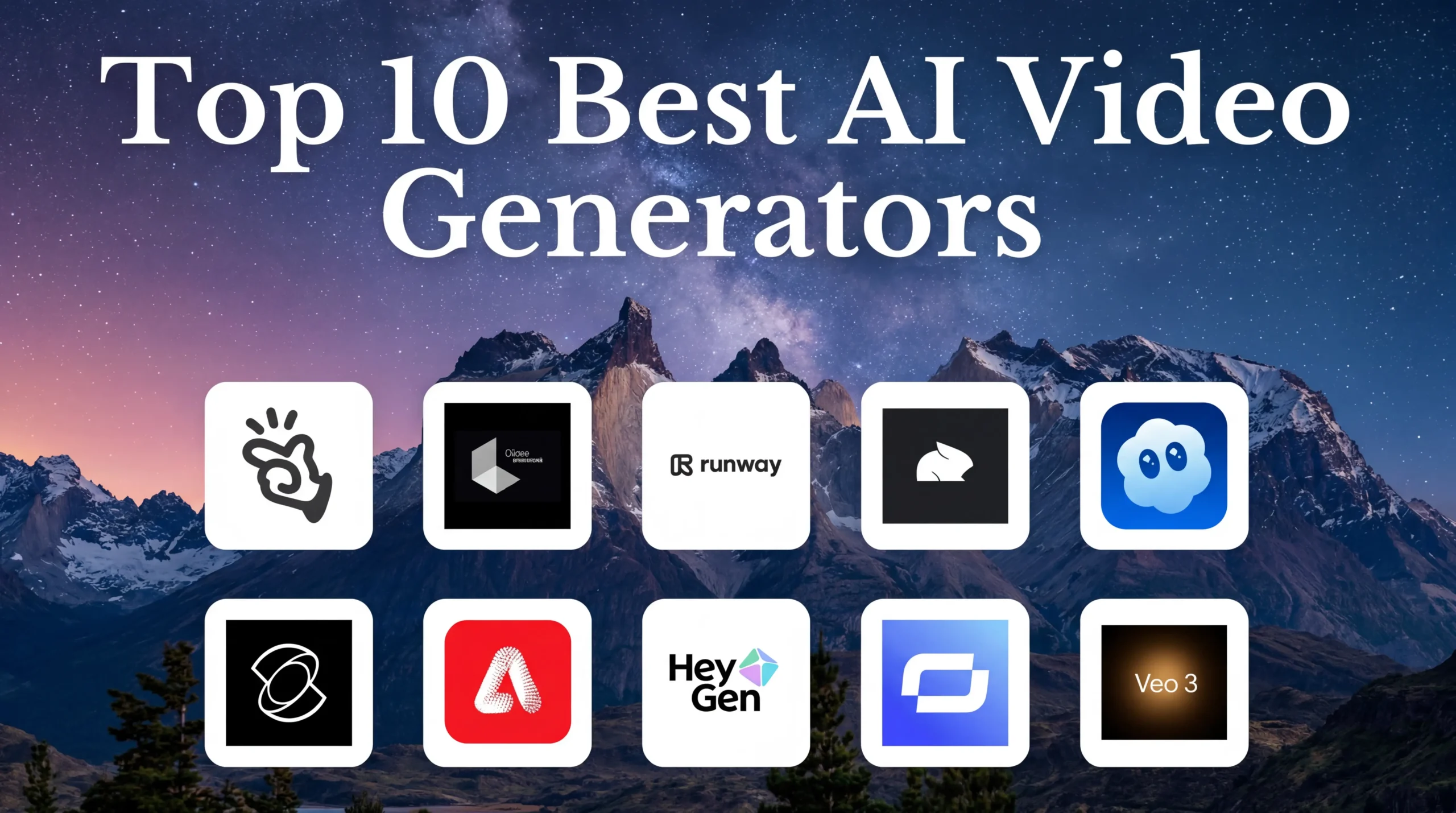
AI video generation has gone in two years from experimental curiosity to real production tool. Today there are several powerful options for different use cases, and picking the right one is the difference between a viable workflow and one that stays at the prototype stage. This comparison covers the main tools, their strengths, their limitations, and which type of creator each fits.
Key takeaways
- Five AI video generators worth knowing in 2026: Grok, Sora, Runway Gen-3, Pika, Kling.
- Pick by use case: automation/scale → Grok; max quality → Sora; pro control → Runway; free start → Pika; quality/price ratio → Kling.
- Grok wins for scale because its web UI is automatable with AutoKuak Suite — batch sending and auto-download.
- The hybrid pattern most serious creators run: iterate with Grok or Pika, render final shots with Veo or Sora.
The state of AI video generation
The tools split into two main categories. Text-to-video: you send a text prompt and the AI generates a clip. Sora (OpenAI), Runway Gen-3, Pika, Kling, and Grok belong here. Image-to-video: you start from an image and the AI “animates” it to create motion from a static frame. For YouTube creators, text-to-video is the most relevant category because it lets you generate content directly from a written brief.
Grok (xAI) — Generation with real-time context
What it is: Grok is xAI’s AI model, integrated into X (formerly Twitter) and accessible at grok.com.
Video capabilities:Grok generates videos and images from text prompts. Its integration with the X ecosystem makes it especially useful for creators working with content tied to real-time trends.
Main advantage for creators:Grok has a web interface that allows automation with Chrome extensions. With AutoKuak Suite, you can send prompt batches to Grok automatically, which makes it especially useful for production at scale. The full prompt-sending and result-downloading flow can be automated.
Limitation: the web UI can change with updates, which can briefly affect automation tooling. For whom: creators who need to process many prompts and want to automate production at scale.
Sora (OpenAI) — The technical reference for quality
What it is:OpenAI’s video generation model. Still one of the references for generation quality. Official documentation at openai.com/sora.
Capabilities: generates clips of up to 60 seconds with notable visual and physical coherence. Handles complex prompts with multiple scene elements.
Main advantage: high visual quality, especially in scenes with camera motion and multiple elements. Limitation: access is limited to ChatGPT Plus/Pro subscribers and it doesn’t allow the same level of automation as Grok. For whom: creators who prioritize visual quality over scale.
Runway Gen-3 — Control and consistency for pros
What it is:Runway is a startup specialized in AI for visual creators. Gen-3 Alpha is its most recent video generation model. Capabilities: text-to-video and image-to-video with notable style control. Advanced camera-control options. Main advantage: the most-used tool by video professionals because of its level of output control. Limitation: plans are pricier than other options; the credit model can get expensive at scale. For whom: creatives who need fine control over style and motion, occasional high-quality production.
Pika — Accessible and fast to start
What it is:Pika Labs offers video generation focused on ease of use. Capabilities: text-to-video and image-to-video with a free plan available. Web and Discord access. Main advantage: simple interface, fast results, no steep learning curve. Limitation: less output control than Runway, lower quality on complex scenes. For whom: creators just starting with AI video generation who want quick results.
Kling (Kuaishou) — Best quality-price ratio
What it is:Kling is Kuaishou’s video generation model. Capabilities: videos of up to 2 minutes with notably coherent physics and motion; 3D motion model. Main advantage: quality vs price. Delivers results comparable to Runway at a significantly lower cost. For whom: creators who need solid quality without Runway’s price tag.
Curious about the full Suite?AutoKuak Suite bundles 4 Chrome extensions with a generous Free plan. See the modules.
How to pick the right AI video tool
| Need | Recommended AI |
|---|---|
| Automation and scale with many prompts | Grok + AutoKuak Suite |
| Maximum visual quality | Sora |
| Advanced creative control | Runway Gen-3 |
| Start without spending money | Pika (free plan) |
| Best quality-price ratio | Kling |
Why automation matters most when scaling with Grok
If your goal is to produce YouTube content at volume using AI, the limiting factor isn’t the model’s quality — it’s your ability to operate the tool efficiently. With AutoKuak Suite you can configure prompt batches and let the extension send them to Grok automatically, collect the results, and move on. For workflows that involve dozens or hundreds of pieces of content per week, that productivity gap is the difference between channels that scale and channels that stall.
If you’re building a high-volume production channel, it’s worth reading how to create and scale a faceless YouTube channel with AI and the step-by-step Grok automation guide.
AutoKuak Suite’s Free plan includes 30 prompts per run. Pro removes the cap entirely and starts at $10.00/mo.
Frequently asked questions
Which AI video generator gives the best free tier?
Pika offers the most generous free plan to start without spending anything. Grok also has free access (with X premium tiers) and Kling ships a free tier for basic generations. For scale and automation on Grok, AutoKuak Suite’s Free plan adds 30-prompt-per-run batches at no extra cost.
Can you actually automate Sora or Runway like Grok?
Not at the same level today. Sora and Runway lock automation behind their official APIs (paid, rate-limited), while Grok’s web UI is open enough for a Chrome extension like AutoKuak Suite to orchestrate batch prompt sending and downloads with no API contract. That’s a key reason creators picking for scale converge on Grok.
What’s the realistic quality gap between Grok and Sora?
Sora has higher fidelity on complex scenes with multiple elements and camera motion. Grok holds its own for shorter clips and visual narrative, especially when paired with X’s real-time context. For pillar content where every frame matters, Sora wins. For high-volume iteration, Grok wins on cost and speed.
Is it worth combining multiple AI video tools in one workflow?
Yes — that’s the dominant pattern among serious creators in 2026. Iterate prompts cheaply with Grok or Pika, then render the final hero shots with Veo (Flow) or Sora. AutoKuak Suite supports both Grok and Flow batch automation, so the hybrid workflow stays inside a single extension.