
Film-look videos, generated with AI
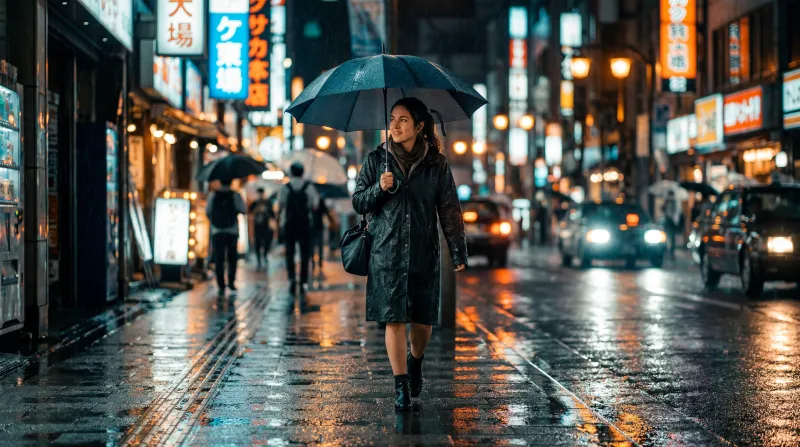
Live-action cinema: photorealistic people and places, shallow depth of field, warm motivated lighting and that teal-and-amber film grade.
What it looks like
- Photorealistic people and places, with real skin and texture.
- Shallow depth of field: the background falls away.
- Warm light that comes from somewhere in the scene.
- Teal-and-amber grade, soft halation and fine film grain.
What videos it suits
- Short documentaries and true-story retellings.
- Brand and product videos with a serious tone.
- First-person stories that want to look filmed.
You write the scene; Studio handles the style
The style is never named in the script. Each line describes what is seen, and this is how one is written:
A woman waits on a station platform at night as a train passes out of focus behind her.
With this style, Studio suggests the Onyx voice (a serious, authoritative male voice). You can swap it from the editor for any of the six, and use a different one on each line.
What to watch out for
This is the least forgiving style: the closer it gets to a photograph, the louder any mistake — a six-fingered hand, a face that shifts between scenes, an impossible reflection. Check image by image before assembling, and if a scene does not convince, swap it for a detail shot: it shows far less.
How it is done, step by step
-
Pick the style before generating
When you create a video, Kuak Studio shows a gallery of 58 video templates: nine formats of its own and the 49 visual styles. You pick one and it applies to every scene in the video.
-
Write the script, or ask for one
Each line of the script is a scene. That is where you describe what is seen — who is in it, where, and what happens — never the style: the template already handles that.
-
Studio generates voice, images and captions
The voice is generated line by line and the images scene by scene, all in the same style. The captions come from the voice itself, so they stay in sync.
-
You finish it in the editor
Change a sentence, regenerate only the scene that does not convince you, move the text, add music and export. The editor runs inside your browser and there is nothing to install.
- The style is picked, not written. Kuak Studio applies it to every image in the video; in the script you only describe the scene.
- Images come out with no text inside, on purpose: AI draws warped letters in the wrong language. Titles and captions go on editor layers, where they read properly and can be fixed.
- Each scene is an image the editor gives camera movement to. It is not frame-by-frame animation, and saying so up front avoids expecting something else.
Frequently asked questions
Can I generate a real person’s face?
Can you tell it was made with AI?
How is it different from Modern realism?


Start on the free plan
Sign in with Google and start on the free plan. No card.